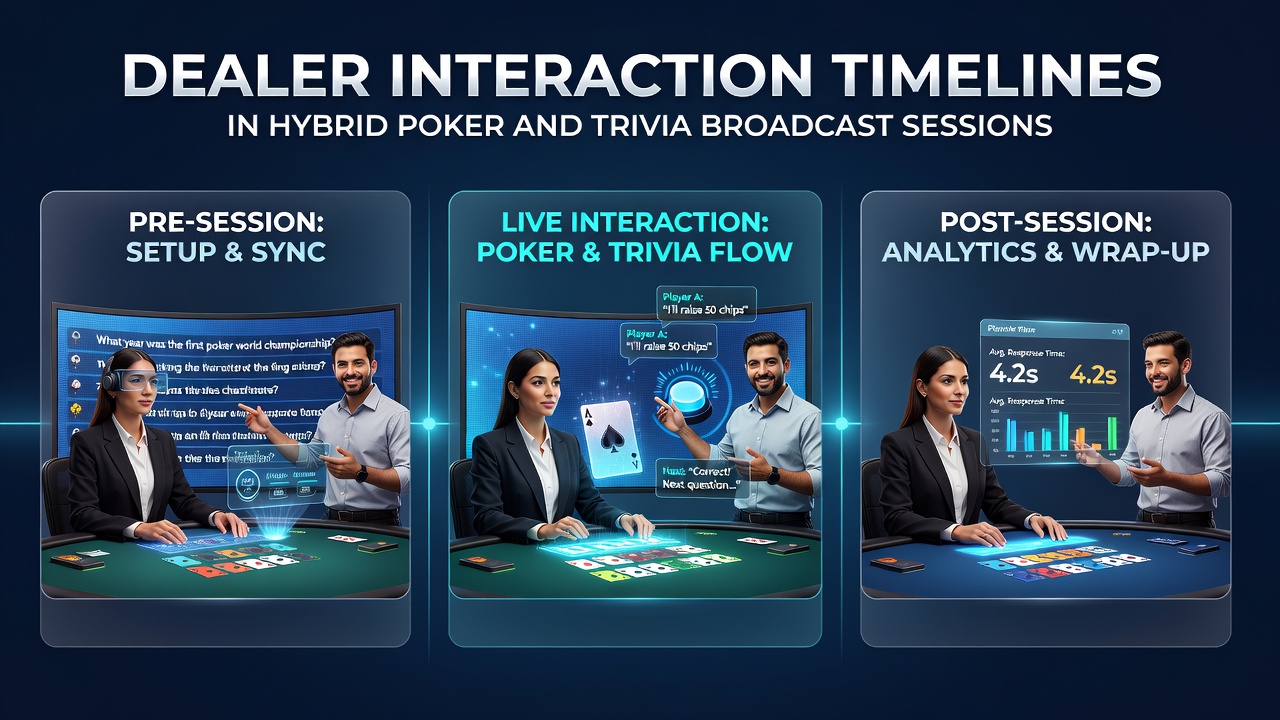
Dealer Interaction Timelines in Hybrid Poker and Trivia Broadcast Sessions
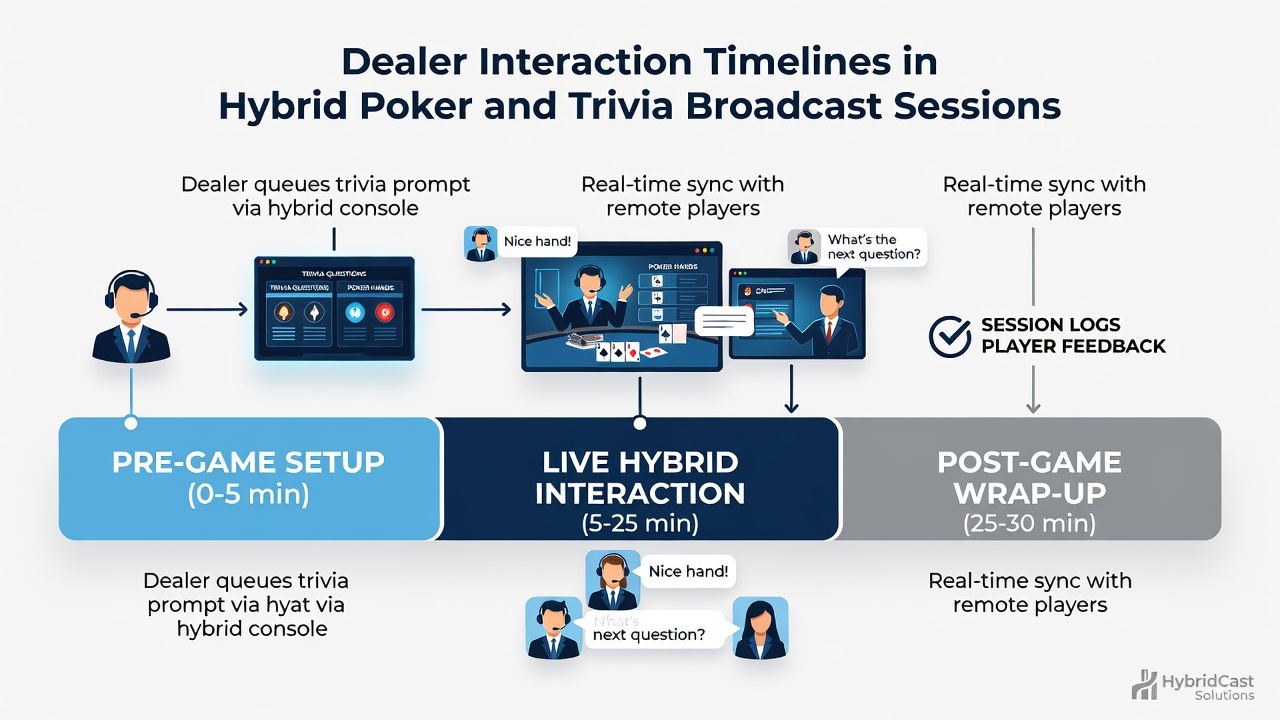
Hybrid poker formats blend physical table play with live broadcast segments, and dealer interaction timelines dictate the pace at which hands progress alongside trivia elements. These timelines synchronize dealer actions such as card distribution, bet collection, and result announcements with question rounds that keep remote viewers engaged through structured intervals. Data from industry reports shows that sessions typically allocate 45 to 90 seconds per poker hand before transitioning to a trivia prompt, which allows dealers to reset the table while hosts deliver content.
Core Components of Timeline Structures
Dealers in these environments follow predefined sequences that start with a 10-second window for player decisions, followed by a 20-second interval for card reveals and verification, and conclude with a 15-second buffer for broadcast overlays. Research indicates that this structure accommodates both in-person participants and streaming audiences without overlap. Observers note that trivia segments insert at fixed points, often after every third hand, creating a rhythm where dealers pause briefly to allow hosts to pose questions on topics ranging from game history to general knowledge.
Integration Points Between Poker and Trivia
Adaptive designs link side wagers in poker variants to trivia outcomes, which means dealers must adjust their interaction speed based on whether a trivia answer influences the next betting round. For instance, a correct trivia response might trigger an immediate dealer action to award bonus chips within 30 seconds, while an incorrect one extends the timeline by 10 seconds for penalty processing. Figures from regulatory filings reveal that such linkages appear in multiple jurisdictions, and they require precise coordination to prevent delays that could disrupt viewer retention. Those who've studied broadcast logs find that successful sessions maintain an average cycle time of 2 minutes and 15 seconds from one full poker-trivia loop to the next.
Regional Variations in October 2026
In October 2026, updates to broadcast standards in several markets refined how dealers handle these timelines during peak viewing hours. The Nevada Gaming Control Board published data showing that hybrid sessions in the state incorporated mandatory 5-second dealer acknowledgment pauses after each trivia resolution to align with new viewer protection guidelines. Meanwhile, operators in Australia adjusted their protocols following guidance from the Australian Communications and Media Authority, which emphasized extended dealer interaction windows during high-stakes poker hands to reduce errors in real-time scoring. What's interesting is that these changes led to measurable shifts, with session lengths increasing by an average of 8 percent without affecting overall engagement metrics.
European markets followed suit with their own adaptations. Industry associations documented how dealers in hybrid trivia-poker events used digital timing tools to track interactions down to the second, ensuring that trivia question delivery never interrupted active betting phases. One case study from a multi-table tournament series revealed that dealers who adhered strictly to 60-second poker resolution windows achieved higher accuracy rates when trivia elements overlapped with side bet resolutions.
Technical Tools Supporting Timeline Management
Broadcast teams deploy software that displays countdown timers visible only to dealers and production staff, and these systems flag when a dealer interaction exceeds its allocated segment. According to reports from the iGaming Ontario regulatory body, such tools reduced timing variances by 22 percent in monitored sessions during the first half of 2026. People who operate these systems often discover that integrating audio cues helps dealers maintain flow, especially when trivia hosts extend question discussions beyond planned durations. Yet the core requirement remains consistent: every dealer action must fit within the established sequence to preserve the hybrid format's seamless appearance.
Challenges in Maintaining Precision
Live environments introduce variables like player hesitation or technical glitches that force dealers to compress or expand their timelines on the fly. Data shows that experienced dealers compensate by shortening card shuffles to 8 seconds instead of the standard 12 when a trivia segment runs long. Academic research from university-led gaming studies highlights how training programs focus on scenario-based drills that simulate these adjustments, preparing dealers for the demands of simultaneous poker and trivia delivery. Those who've examined operational logs note that sessions with minimal deviations correlate strongly with higher viewer completion rates across platforms.
Future Adjustments and Data Trends
Industry organizations continue to analyze interaction data to refine timelines, and preliminary findings from 2026 reports suggest that incorporating viewer feedback loops could further optimize dealer pacing. For example, real-time analytics might prompt dealers to extend a verification step by 5 seconds if engagement dips during a trivia round. Regulatory updates expected later in the year aim to standardize these practices across borders, drawing on evidence from both North American and Asian markets where hybrid formats have gained traction. The reality is that precise dealer timelines form the backbone of these sessions, enabling the blend of skill-based poker and knowledge-driven trivia to function as a cohesive broadcast product.
Conclusion
Dealer interaction timelines in hybrid poker and trivia broadcast sessions operate through structured sequences that balance table actions with content delivery. Regional data from October 2026 demonstrates ongoing refinements driven by regulatory and technological inputs. As formats evolve, the emphasis on synchronized timing continues to shape how these sessions unfold for both participants and audiences.